Rock climbing seasons in Europe: how they shape your planning
Siurana, Font, Céüse or Rodellar set your athlete's window better than any calendar. How to build a training year backwards from rock conditions.
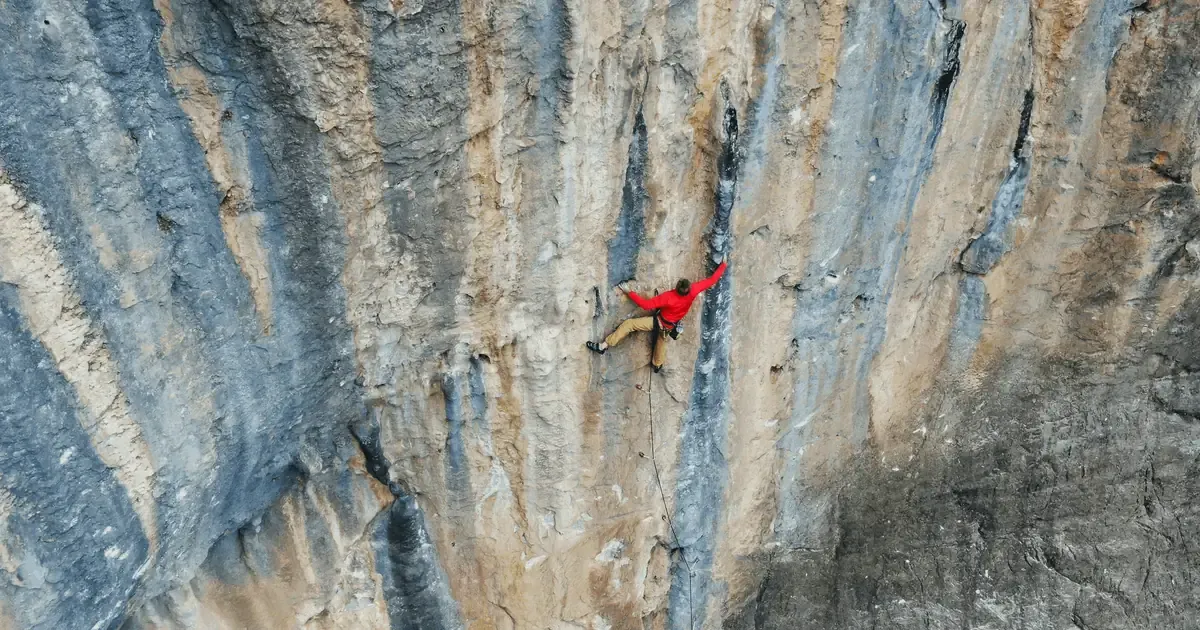
An athlete in a sport with a strong federation has a date: Saturday at ten in the morning. The whole plan points there.
A rock climber doesn’t have that. They have a crag, an aspect, an altitude and a rock type, and out of those four comes a window of conditions that no calendar decides. If their project is in Siurana, their season is winter. If it’s in Céüse, it’s summer. And if it’s in Fontainebleau, the season exists, but it can rain for three weeks straight and there’s no season at all.
Planning for that isn’t worse planning. It’s planning against a goal with different properties, and almost every mistake in annual periodization for climbing comes from treating a weather window as if it were a competition date.
The three properties of a rock window
It’s not a day, it’s a range. The Siurana season isn’t 14 February: it’s four or five months. That changes the problem completely. It’s not about hitting a peak and dropping off afterwards, but about holding a high level for weeks or months without breaking. A classic two-week taper solves a competition; it doesn’t solve a season.
It’s probabilistic. In Fontainebleau, climbing wet sandstone is forbidden because the rock breaks, so a ten-day trip in January can give you three usable days or none. In Céüse the summer window is far more reliable. A goal with high weather uncertainty can’t be planned with a single peak: you plan several opportunities and accept that some will be lost.
It repeats every year. This is the good news, and the part almost nobody exploits. The calendar of an athlete who climbs in the Catalan pre-Pyrenees is substantially the same every season. Once you’ve built it properly, it’s a template, not new work every September.
The windows, roughly
Indicative, with the obvious caveat: within each area there are sectors facing opposite ways, and the conditions on the day are decided by wind and humidity, not by the month.
| Crag | Type | Main window | What matters for planning |
|---|---|---|---|
| Siurana (Tarragona, Spain) | Limestone, sport | Autumn, winter and spring | Summer only in the shade and early. Long season: the problem is holding form |
| Margalef (Tarragona, Spain) | Conglomerate, pockets | Autumn to spring | Very specific demand on pockets and two-finger holds. Shapes the finger work beforehand |
| Chulilla (Valencia, Spain) | Limestone, long routes | Autumn to spring | Long-route endurance. The effort profile looks nothing like bouldering |
| Albarracín (Teruel, Spain) | Sandstone, bouldering | Autumn to spring | Altitude and cold. In midwinter the cold itself closes the window |
| Rodellar (Huesca, Spain) | Limestone, tufas | Spring and autumn | Very physical, overhanging climbing. High volume per route |
| Fontainebleau (France) | Sandstone, bouldering | Autumn to spring | No climbing when wet. High-uncertainty window |
| Céüse (France) | Limestone, sport | Late spring to autumn | 1,750 m and a 45-minute uphill approach. The approach is load |
| Arco and the Sarca valley (Italy) | Limestone | Spring and autumn | Huge area: pick the aspect and there’s almost always a sector in condition |
The interesting part of this table isn’t when to go. It’s that the athletes of a single coach are in opposite phases of the year at the same time.
The problem of inverted seasons
If you coach ten athletes in Spain or France, you probably have, all at once:
- One projecting in Siurana, who needs to be in shape in December and hold it until March.
- Another aiming at Céüse, whose peak is in July and who should be building base in December.
- Another with a Font trip in February that can evaporate with the rain.
- Two who compete in indoor bouldering and do have fixed dates.
- And three with no goal who just want to climb better.
That’s five different calendars living side by side. There is no group mesocycle that works for everyone, and it’s why climbing coaches end up with individual folders instead of a master plan.
It also has a counterintuitive consequence: for a coach in Spain, July and August are the natural gap for strength and building blocks, because local rock is out of season. For the athlete going to Céüse, July is exactly the peak. Applying “summer is for building” as a general rule ruins that athlete’s season.
Conditions are not the same as comfort
A distinction worth being clear on when you build the peak.
Guidebooks usually recommend the comfortable season: in Font, for example, spring and early autumn, when the temperature is pleasant. But maximum performance on rock depends on friction, and friction improves with cold, dry air. For an athlete about to try their limit project, the good window is the cold, dry one, which almost never matches the comfortable one.
The practical rule: if the goal is to send at your limit, plan towards conditions; if the goal is volume and rock experience, plan towards comfort. They’re two different goals and they aren’t prepared the same way.
Building the year backwards
The order is always the same, and it starts with the place, not the training:
- Crag and window. Where they’ll climb and which months are viable there.
- Demand of the crag. Margalef asks for pockets and two-finger holds; Chulilla asks for long-route endurance; Font asks for power, compression and tolerance for slopers. The specific block is designed against that demand, not against a generic model.
- Realistic date to be in shape, with margin. If the window is long, the peak goes at the start and is held; if it’s narrow and uncertain, you plan two separate opportunities.
- Backwards: blocks, deloads and transition, with the usual mesocycle structure.
- The off-season as a building block, which in rock climbing isn’t dead time: it’s when you can fit the strength work that doesn’t fit in season.
Step 2 is the one most often skipped and the one that makes the biggest difference. Preparing someone for Margalef by training full crimps on 20 mm edges is training the wrong movement with a lot of discipline.
And the dated goal has to exist from day one: it’s the first question in the screening questionnaire, precisely because without it there’s no plan, just open-ended training.
When the window is lost
It will happen. It rains the week of the trip, the athlete gets injured in October, their job changes. Three sensible responses:
- Alternative windows. If the project is in Font and February falls through, March and next autumn are still there. The season repeats; panic doesn’t help.
- Process goals that don’t depend on the sky. Strength numbers, accumulated volume, onsight level. If the whole season hangs on one send, a spell of rain turns five months of work into a subjective failure, and that wears the athlete down more than the rain itself.
- Hold, don’t re-peak. If the window shifts three weeks, you almost never need to redo the plan. You need to maintain and wait.
What you’re not counting on rock days
One detail repeats in every annual plan I’ve seen up close: rock season is when the athlete accumulates the most load and records the least.
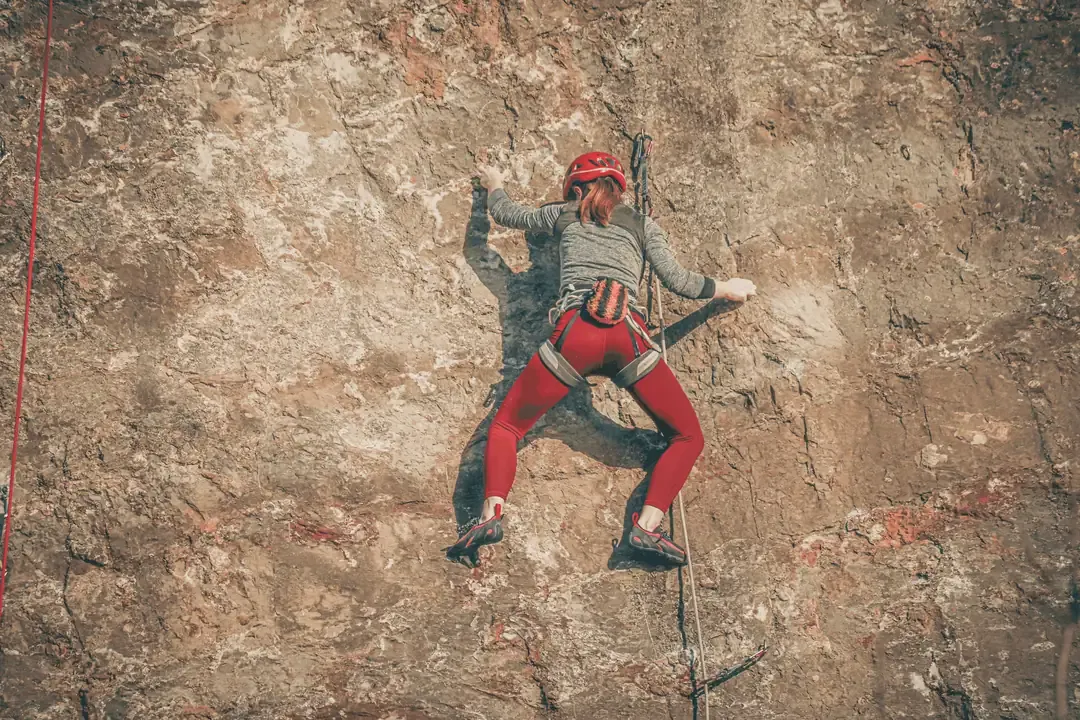
Five days in a row climbing in Siurana are five days of finger strain, usually at higher intensities than the plan, plus approaches and more hours belaying. If the plan only counts the weekday sessions, the load calculation for peak season is wrong by definition, and that’s exactly when being wrong costs the most. It’s the finger axis we describe in quantifying training load: session duration tells you nothing about what the pulleys have taken.
Common mistakes
- Applying a competition calendar to a rock goal. A sharp peak for a four-month window.
- Using the same seasonality for every athlete. It works until one of them heads to a summer crag.
- Not preparing for the crag’s specific demand. The most expensive mistake and the quietest.
- Forgetting the approach. Forty-five minutes uphill with gear, twice a day, for ten days, is load. In Céüse it’s part of the plan, not an anecdote.
- Measuring success only by the send. It leaves the season at the mercy of the weather.
Where this breaks
None of the above is hard to think through. It’s hard to maintain.
A coach with twenty athletes has twenty calendars with different windows, in opposite phases, each with its own crag-specific demand and its own chance of being washed out by rain. Knowing in October who is building, who is entering the specific phase and who should already be holding form isn’t a question of judgement: you have the judgement. It’s a question of having all twenty calendars in one place where you can see them at once.
When that lives in separate folders, the same thing always happens: the athlete whose window opens in six weeks gets noticed when there are two left. Not through carelessness, but because nobody looks at twenty timelines in parallel on a Tuesday afternoon. It’s the same limit described in managing climbing athletes without spreadsheets, applied to the axis a spreadsheet handles worst: time.
The good part is still the third property above. Windows repeat. The year you build well this season is largely the year you’ll reuse next season, and the work shifts from redoing to adjusting, as long as this year’s plan has been saved somewhere you can open again.
In ClimbrLab every athlete has their own plan with goals and dates, and the load from rock days goes into the same weekly calculation as gym sessions. We’re opening early access for coaches.
Keep reading
How to plan a climbing season in mesocycles
A practical guide to structuring a climbing season into mesocycles: how to distribute load, when to train max finger strength and how to peak for your project.
Shoulder and elbow: the climbing injuries you're not watching
The shoulder is now the second most injured area in climbing and almost never gets logged. Why it hides, which sign gives it away and what prevention works.
Initial assessment of a climber: what to measure on day one
The screening questionnaire before taking on an athlete, which tests make a useful baseline, what not to test yet, and why protocol beats the number.
Do you coach climbing athletes?
ClimbrLab is software for climbing coaches who work with several athletes. You plan sessions and cycles, your athletes log workouts and routes from their app, and you see their finger strength (with Tindeq), training load, injuries and progress in one dashboard, with chat built in. If there are several coaches, Team mode lets you share a library and split athletes between you.
Tell us how you coach and we’ll get back to you with access.